S / Services

Eight IT services, described by what they involve

Each service below sets out its purpose, the situations it suits, the delivery stages it normally follows and the business value it is intended to produce. Outcomes depend on scope and circumstances, so no guarantees are attached.

  • 01Custom software development
  • 02Web application development
  • 03Cloud solutions
  • 04IT consulting
  • 05Systems integration
  • 06Data and analytics solutions
  • 07Cybersecurity support
  • 08Software maintenance and modernisation
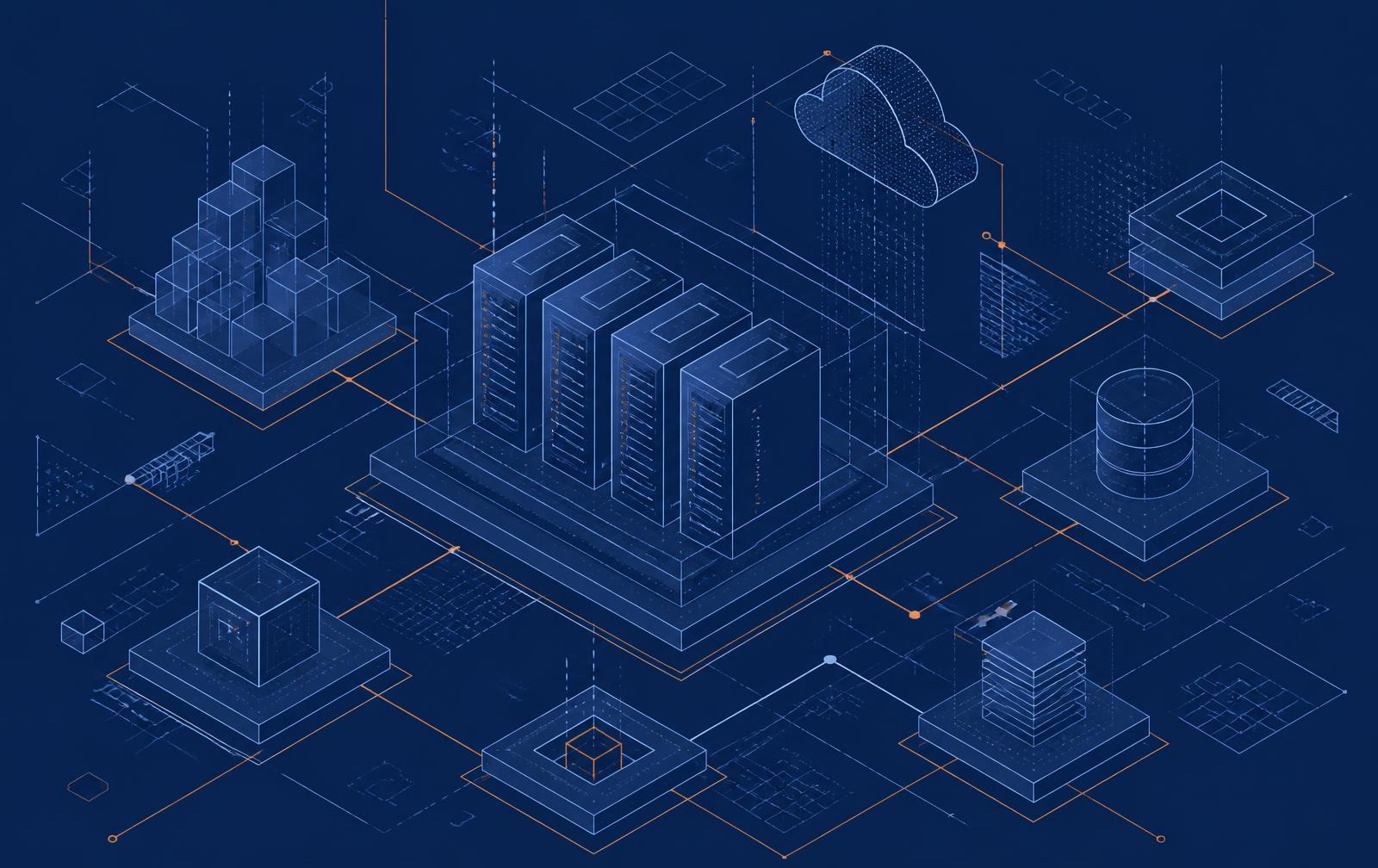
Isometric technical diagram of application, storage and network components in a digital architecture
Application and infrastructure layers
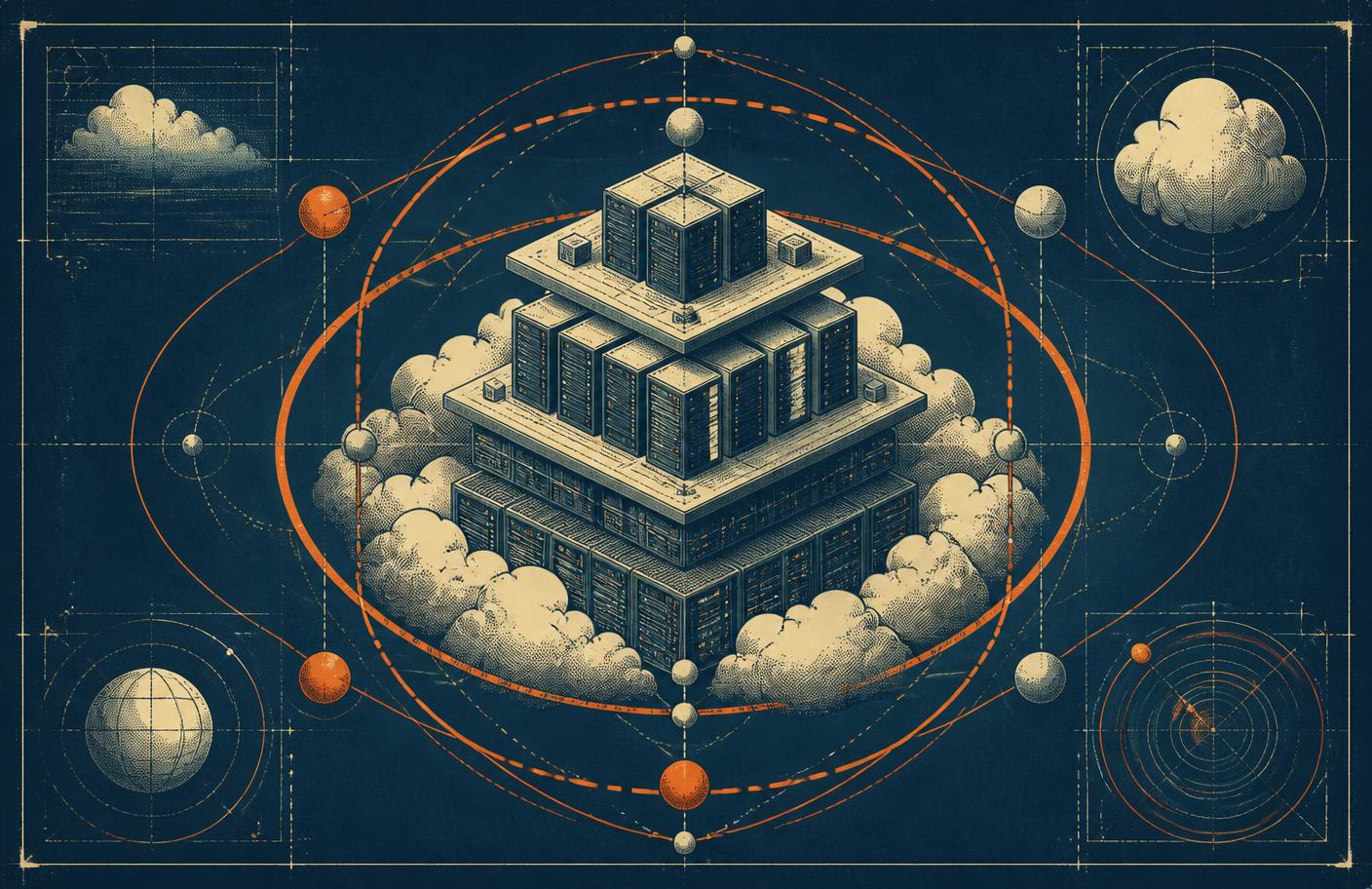
Layered cloud platform diagram with tiered server stacks inside orbital rings
Cloud environments defined as code
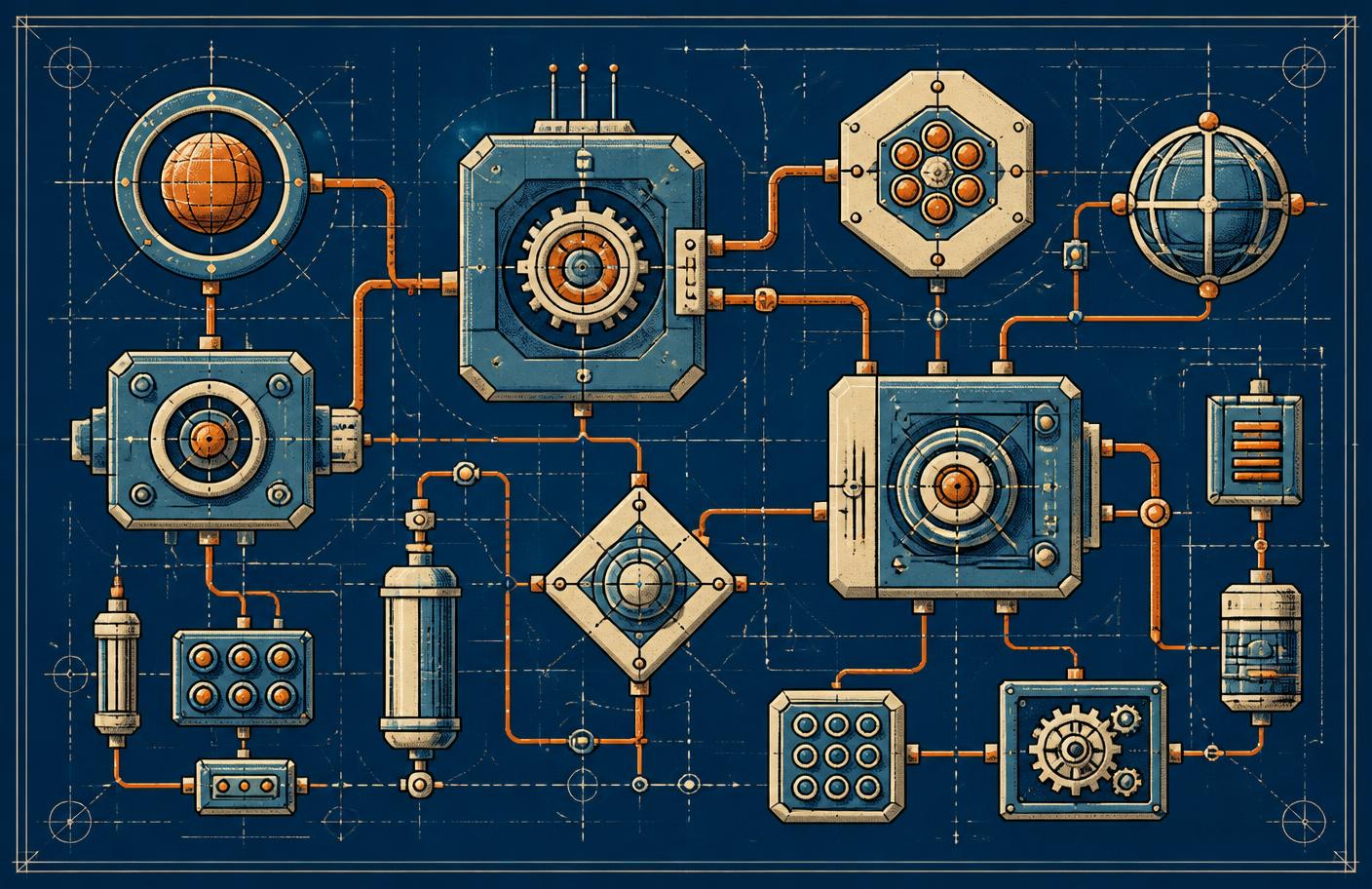
Blueprint diagram of interlocking system modules linked by routing lines
Integration contracts between systems
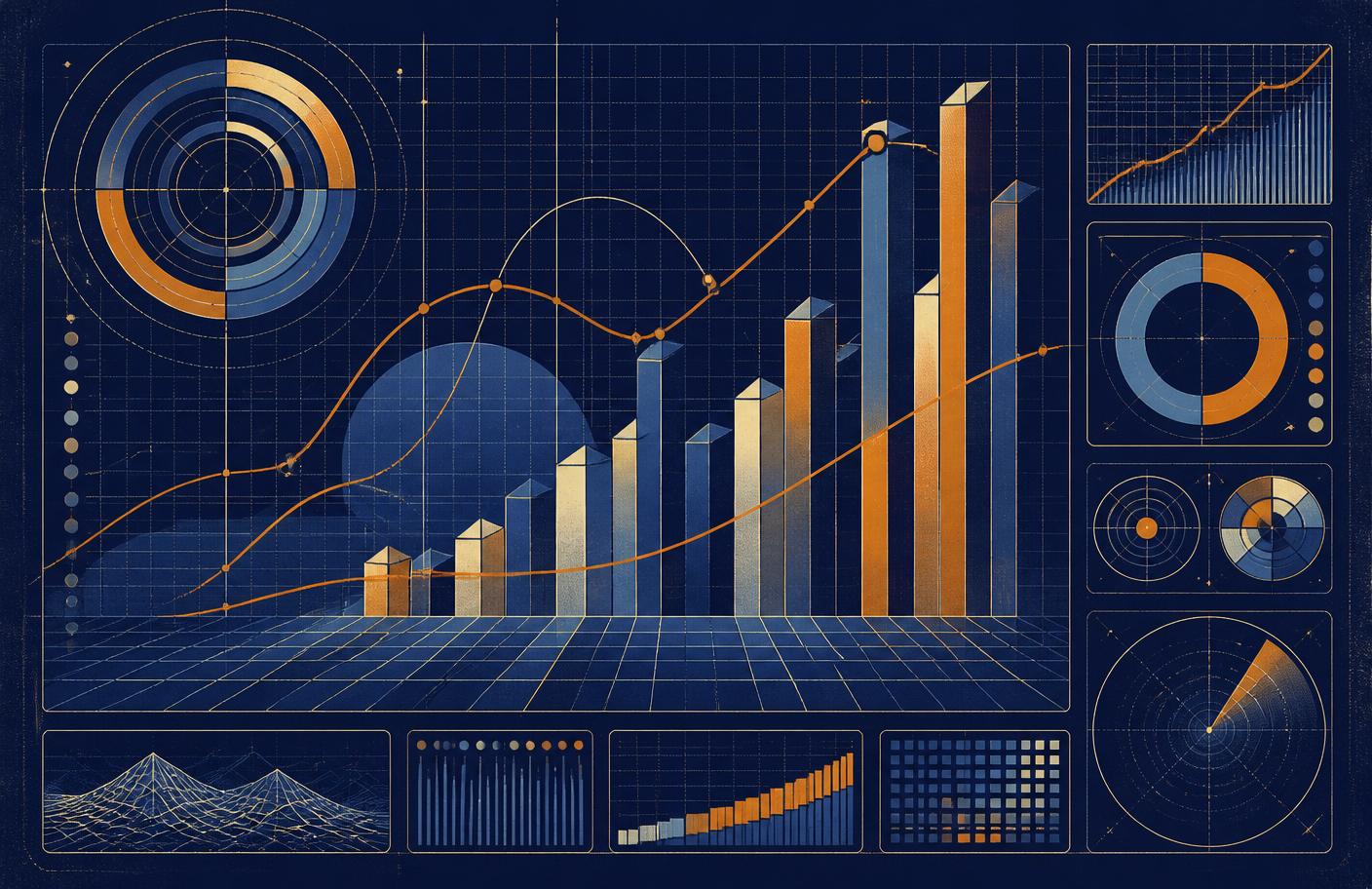
Analytical chart panel with plotted curves, bar structures and gauges
Modelled data and reporting layers

01

Custom software development

Building an application around a process that off-the-shelf software cannot represent without distorting it — internal operations platforms, domain-specific tools and systems that encode rules unique to an organisation.

Suitable use cases

  • A workflow currently held together by spreadsheets and email threads
  • A packaged product that requires so much customisation it has become a liability
  • A process where correctness rules are specific and must be enforced by the system
  • A product idea that must be validated with a limited but genuinely working version

Typical delivery stages

  1. 01Discovery: process mapping, constraints, acceptance criteria
  2. 02Architecture: data model, component boundaries, integration points
  3. 03Increment delivery: implementation with review and automated tests
  4. 04Verification: functional, integration and performance checks
  5. 05Release and handover: deployment pipeline, runbooks, documentation

Business value

The software matches the way work is actually done, so fewer manual workarounds are needed and rules are applied consistently rather than remembered by individuals.

02

Web application development

Delivering browser-based applications and public web platforms that render quickly, remain accessible, and behave predictably on ordinary devices and connections.

Suitable use cases

  • A customer-facing portal that must work on mobile as well as desktop
  • An internal tool that should be reachable without installing software
  • A content-driven site where search visibility and load time matter
  • Replacing a legacy desktop interface with a maintainable web front end

Typical delivery stages

  1. 01Interface and content structure definition
  2. 02Component system and accessibility baseline
  3. 03Server rendering, routing and data-loading strategy
  4. 04Performance profiling against realistic device and network conditions
  5. 05Release with monitoring of client-side errors and page performance

Business value

A single deployable interface for every user, easier to update than installed software, with performance and accessibility treated as measurable requirements.

03

Cloud solutions

Designing and operating cloud environments so capacity, cost and configuration are explicit and reproducible rather than the product of accumulated manual changes.

Suitable use cases

  • Moving an application off ageing self-managed servers
  • Traffic that varies sharply and needs elastic capacity
  • Environments that drifted apart because they were created by hand
  • Cloud spend that grew without visibility into what drives it

Typical delivery stages

  1. 01Assessment of current workloads, dependencies and data volumes
  2. 02Target environment design: networking, compute, storage, identity
  3. 03Infrastructure expressed as code with peer review
  4. 04Migration in stages with verification and a rollback path
  5. 05Operational setup: monitoring, backups, cost reporting

Business value

Environments can be rebuilt from their definitions, capacity follows demand, and infrastructure changes go through the same review discipline as application code.

04

IT consulting

Providing an independent technical view before a significant commitment — a rebuild, a platform selection, a migration or a change in delivery process.

Suitable use cases

  • Deciding whether to extend an existing system or replace it
  • Choosing between building in-house and adopting a product
  • Diagnosing why delivery has slowed despite adequate staffing
  • Preparing a sequenced modernisation plan for an ageing platform

Typical delivery stages

  1. 01Interviews with technical and operational stakeholders
  2. 02Review of architecture, code health, delivery process and infrastructure
  3. 03Option analysis with cost, risk and effort described per option
  4. 04Written recommendation with a sequenced plan and open risks
  5. 05Optional follow-up review once the first steps have been taken

Business value

Decisions get made against documented trade-offs rather than assumptions, and the reasoning stays available to the team long after the engagement ends.

05

Systems integration

Connecting applications, services and legacy systems so data moves reliably between them, with explicit contracts and observable behaviour when something fails.

Suitable use cases

  • Departments running separate tools that require daily reconciliation
  • A new application that must exchange data with existing back-office systems
  • Third-party APIs with rate limits, partial failures or inconsistent schemas
  • Legacy machinery or software reachable only through file drops or older protocols

Typical delivery stages

  1. 01Mapping data flows, ownership and the canonical source for each entity
  2. 02Interface contract definition, including error and retry semantics
  3. 03Adapter and message-flow implementation with idempotent handling
  4. 04Failure testing: timeouts, duplicates, malformed payloads, outages
  5. 05Monitoring, alerting and reconciliation reporting in operation

Business value

Manual re-keying and reconciliation shrink, failures are visible instead of silent, and each piece of data has one agreed source of truth.

06

Data and analytics solutions

Building the pipelines and data models that turn operational records into figures people can trace, compare and rely on for decisions.

Suitable use cases

  • Reports from different systems that disagree on the same measure
  • Analysis that depends on a manual export and a personal spreadsheet
  • Growing data volumes that make direct queries against production unsafe
  • A need for scheduled operational reporting rather than ad hoc requests

Typical delivery stages

  1. 01Definition of measures and dimensions with the people who use them
  2. 02Ingestion design: sources, scheduling, incremental loading
  3. 03Modelling into a warehouse layer with documented transformations
  4. 04Data quality checks and reconciliation against source systems
  5. 05Reporting layer and handover of definitions and refresh procedures

Business value

Reporting stops being a negotiation. Every figure has a documented definition and a traceable path back to the records it came from.

07

Cybersecurity support

Strengthening the security posture of the systems we build or maintain: identity and access, secret management, dependency hygiene, logging and incident readiness.

Suitable use cases

  • Credentials shared informally or stored in code repositories
  • Access that was never revoked after people or projects changed
  • Dependencies drifting behind published security advisories
  • No agreed procedure for what happens during a suspected incident

Typical delivery stages

  1. 01Review of access model, secret handling, exposure and dependencies
  2. 02Prioritised findings with practical remediation steps
  3. 03Implementation: identity policy, secret store, hardening, patching
  4. 04Logging, alert thresholds and an incident response procedure
  5. 05Periodic re-review as the system and its dependencies change

Business value

Common causes of incidents are removed methodically, and if something does happen there is a written procedure and the evidence needed to understand it.

08

Software maintenance and modernisation

Keeping existing systems healthy and gradually restoring the ability to change them safely, without a disruptive full rewrite.

Suitable use cases

  • A critical application with no tests that everyone avoids editing
  • A framework or runtime approaching end of support
  • A system that only one person knows how to deploy
  • Accumulated defects that make each release unpredictable

Typical delivery stages

  1. 01Assessment of code health, test coverage, dependencies and deployment
  2. 02Characterisation tests capturing current behaviour before changes
  3. 03Prioritised remediation: upgrades, refactoring, deployment automation
  4. 04Incremental replacement of the highest-risk components
  5. 05Ongoing maintenance: patching, monitoring and documented handover

Business value

Risk is reduced in steps that can be paused or reordered, and the system becomes something the team can change deliberately instead of cautiously.

How services are combined

Most engagements draw on several of these areas at once — a custom application usually needs a cloud environment, an integration layer and a security review before it can go live. FAMILY ATTRACTIONS LTD scopes them as one plan so the dependencies between them are visible from the start.

Written enquiries

gloriajack34@gmail.com